


Key point summary
Travelling with babies is easy if you’re better prepared. Do your research and make sure you know the essential things to pack for travelling before you leave home.
Baby routines can be disturbed when infants travel but there are things that can minimise disruption, like flying at night or taking regular breaks on road trips.
Keeping your baby comfortable while travelling is important – be mindful of overheating, hydration and packing lots of clean clothes in your carry on.
Getting away with a baby might seem impossible, especially when you have a newborn, but with a bit of planning, it is possible. Whether you’re flying with a newborn or heading off on a car trip, there are things that will make it easier – just follow these tips and remember to expect the unexpected.
Before You Travel: Smart Prep for Flying or Driving with a Baby
As with most things baby related, preparation is the key to travelling with a newborn. Yes, a lot of what happens when you travel is out of your control, but having some infant travel essentials within easy reach will make a world of difference.
Pack Baby Travel Essentials
Check out this list of what to pack, then read Travel Essentials We Love for a detailed breakdown.
Car travel
Car seat: Your baby legally needs to be secured in an age-appropriate car seat. If you’re driving overseas, check the laws in those countries too.
Window shade:Stop your baby overheating in the car by having appropriate window shades to block out the sun.
Extra clothes: Pack more than you think you’ll need, especially if you’ll be in the car for a long duration.
Swaddles:A lightweight swaddle will keep your baby comforted during a drive.
Plane travel
Extra clothes: Pack a few sets of clothes into your carry on and keep it within easy reach.
Swaddles or sleepsuits: Dress your baby for sleep like you would at home – either in a swaddle or a sleepsuit that comforts them to sleep.
Passport and visa: Make sure you pack all of your baby's documentation, and keep it with your own passport during the trip.
ID tags and contact info: Address tags – with contact information – may help you if your baby’s bag, carrier or pram go missing.
Travel insurance: Before you leave, research travel insurance for your baby that includes medical cover.
Medical records: It’s always a good idea to travel with medical records, especially if your baby is taking any medication.
Sleep
Blanket: A familiar blanket will help your baby soothe themselves to sleep/
Soft toy or comfort item: Giving them their favourite comfort item will make the trip seem less strange.
Dummies: If your baby uses pacifiers, pack enough to cover losing any.
Portable white noise machine: This is probably more relevant for when you reach your destination – a white noise machine can cover lots of unfamiliar sounds.
Feeding
Formula or breast milk packed in an insulated bag: Pack enough for the duration of the trip and then some in case of delays.
Sterilised bottles: Work out how many bottles you’ll need to get to your destination and pack enough.
Bottle brush and detergent: You may need to sterilise on the go – be ready with all the equipment.
Age-appropriate snacks and baby food: You’ll need plenty of baby food, especially on long flights. Pack food that’s easy to eat.
Sippy cups: If your baby is old enough, they’ll need a sippy cup to stay hydrated.
Bibs and burp cloths:Be prepared for mess with an ample supply of bibs.
Clothing and Accessories
Growsuit and onesies: Layers are essential while travelling so pack a good supply of onesies.
Sleepwear: Try to stick to routine as much as possible and dress your baby for sleep in their usual sleepwear.
Sun hat or beanie
Socks and shoes
Nappy changes
Portable changing mat or disposable changing mats: You’ll need somewhere clean to change your baby and packing your own mat is a good idea.
Plenty of disposable nappies and wipes: They take up a lot of space in your carry-on but you need to have enough for the trip and a few when you get to your destination, too, just in case you can’t stock up immediately or your bags get lost.
Disposable bags: Keep things tidy with plenty of bags.
Travel-sized nappy cream: Pack whatever you use at home to keep your baby comfortable.
Hand sanitiser (for you): On the road you may not have immediate access to water so carry hand sanitiser as well.
Safety
Sunscreen: Depending on your child’s age, pack appropriate sunscreen for when you’re outdoors. (Read up on Sun safety for babies before you go.)
Insect repellent: Protection from bugs is essential, especially if you’re heading to a hot destination.
First aid kit: Pop a small kit with all the essentials in the car or your carry on. You never know when you might need it.
On the move
Baby carrier: These make moving through airports easier and are handy on planes too.
Compact stroller: An easier-to-maneuver pram that doesn’t take up much space is a must on holidays.
Sun protection such as hats, long loose clothing and umbrellas if travelling in the car.
Bring comfort items
For smooth travel with an infant, comfort items are a must. Bring their favourite soft toy, and a familiar blanket may also help them fall asleep. If your baby uses a dummy, pack a few and if you’re flying, make sure the dummies on a clip – airplane floors are surprisingly dirty. Don’t forget enough changes of clothes to get you to your destination.
Plan feedings around travel
Feeding your baby may be your secret weapon, especially when you’re flying with a baby. Start feeding your baby just before take-off and again just before landing – the sucking motion can help equalise the pressure in their ears, making the experience more pleasant. Don’t give your baby a bottle until the plane is moving to avoid wasting formula or expressed breast milk.Then be prepared throughout the rest of the flight with everything you need for a feed within easy reach – your baby’s feeding schedule may be a little off kilter, so just roll with it.
Prepare for unexpected delays
You can almost guarantee delays and scheduling problems when you’re travelling with an infant on a plane. Pack more than you need of everything (within reason), so you have enough supplies to see you through. Make sure you pack age-appropriate activities to keep your baby entertained during delays, too.
During the Journey: Keeping Baby Happy and Calm
Unsplash: https://unsplash.com/photos/woman-carrying-baby-while-sitting-on-gray-seat-r3bZMKGjhZQ
Whether you’re in the air or on the road, keeping your baby comfortable and calm is the key to a successful trip. According to the Australian Bureau of Statistics, more than 47% of Australian families with children under two years old took at least one overnight trip in 2023.
Keep baby comfortable
Dressing your baby in layers, especially for a flight, is a good way to manage their comfort levels. You can then add or remove layers to match the conditions. Making sure you have enough clean, dry clothes is also important.
As much as possible, stick to your baby’s regular routine for sleeping and feeding, but be kind to yourself if this doesn’t happen. To get your baby ready for longer trips, practice with shorter car trips and, if possible, shorter flights.
Be ready for diaper changes
Have your nappy bag within easy reach in planes and the car – packing it in the boot, under a load of holiday essentials, for example, is not best practice. It’s a good idea to have some disposable change table covers handy, too. You might have the best intentions to use your portable changing mat, but you never know when you might need to ‘make do’.
Keep baby entertained
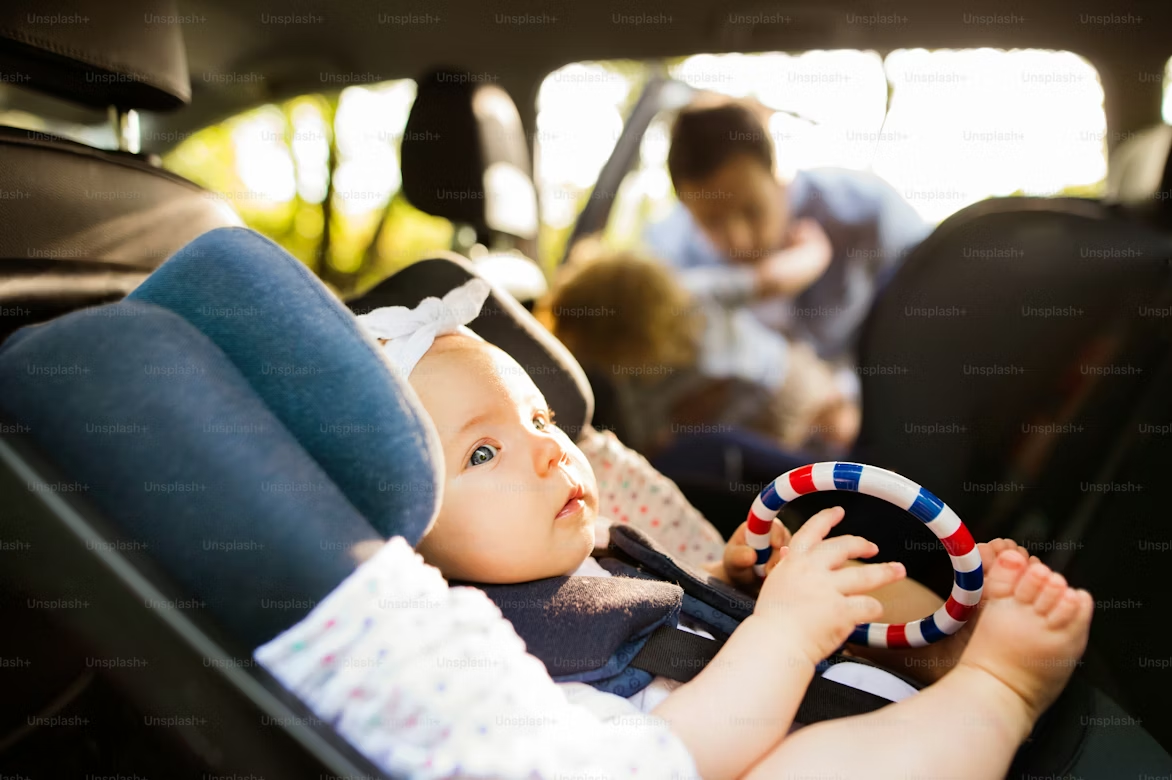
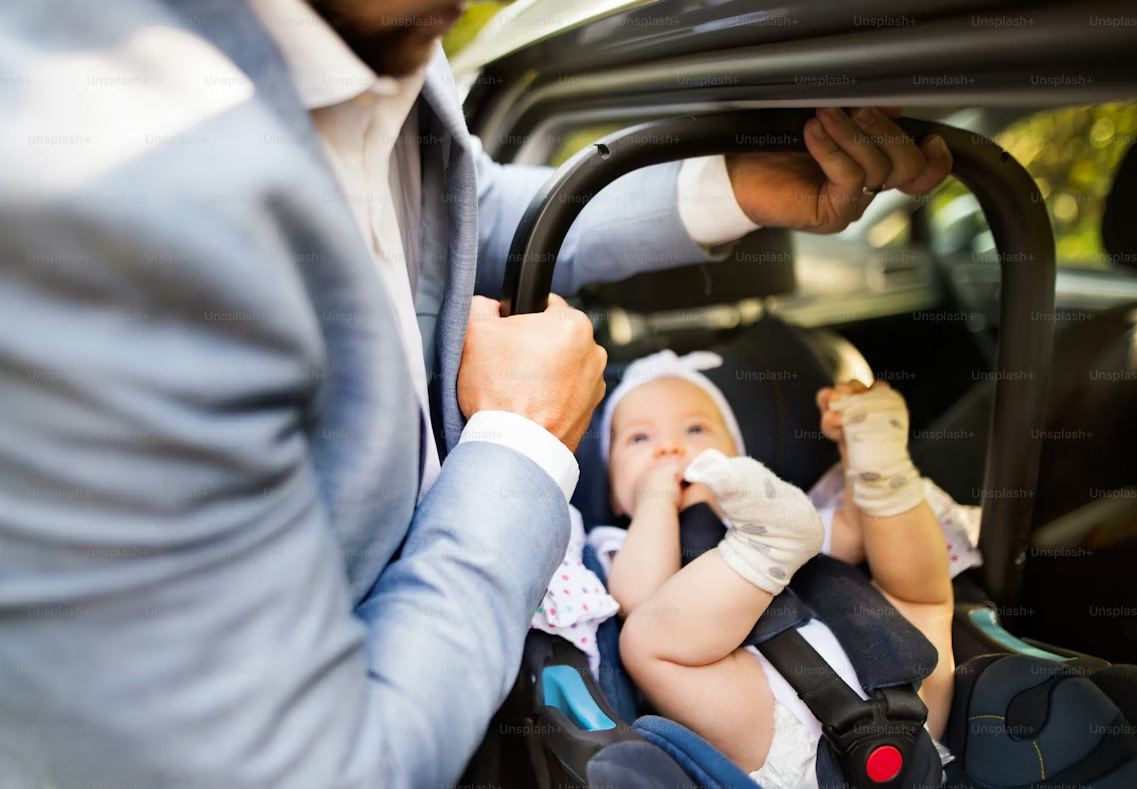
Space is at a premium in the car and on a plane so pack a variety of new and familiar small items such as sensory books, finger puppets and, if they are old enough, self-feeding snacks.
For older babies, draw their attention to new things, like looking out the window or items on the plane. You can also sing songs and play old-school games like peek-a-boo.
Stay flexible and patient
Being tired when you travel is a given, but being tired when you travel with a baby is next level. Be kind to yourself and your baby – this is a new experience for all of you. Be ready to pivot, and make sure you’ve done your prep and packed enough supplies to see you through.
Car travel tips for babies
According to a 2024 report on child restraint use by the Queensland Families and Communities Commission, only 58% of children affected by crash-related incidents were in fully compliant child restraints — highlighting the importance of correct installation.
Doing a long drive with a baby can be as intimidating as hopping on a plan with a newborn. Set yourself up for success with these tips.
Choosing the right car seat
Before buying a car seat, acquaint yourself with this guide to car seats. There’s a lot you need to know, including the child car seat laws in Australia, the different types of car seats, how to install car seats and how your child’s car seat needs to change as they grow. When you’re going through your baby travel essentials checklist for road tripping, car seats need to be your number one priority. Make sure you’re up on these safe car ride tips, too.
Keeping baby comfortable and happy
When it comes to car essentials for a newborn, window shades are right up there. You need to protect your baby from the UV rays coming through the window and stop your little one overheating. If your baby hasn’t done much car travel, consider sitting in the back for at least some of the trip so you can monitor their comfort levels, make sure they stay hydrated and have enough fresh air.
Take regular breaks
Be prepared for your road trip to take longer when you’re travelling with an infant. Plan to stop at least every two hours – get your baby out of the car, change them, feed them and give them some tummy time. This gives them a chance to stretch and move around, and it’s not a bad idea for you and the driver either.
Special tips for flying with a baby
You can never do enough research before boarding a plane with a baby or toddler. Make sure you check out Travelling with a newborn on a plane – it answers questions like when can an infant fly on an airplane, how to book a ticket for a baby and what to do with your pram. Read below for more tips, too.
Fly at night when possible
It’s not always possible to fly at night – especially when you’re doing a long trip from Australia – but if you can plan your trip so the bulk of flying is done at night time, it may reduce some of the stress. Babies are likely to maintain some of their regular sleep patterns, hopefully making it easier for everyone when you reach the destination.
Request an airline bassinet
It’s a common question for flight travel: can I get a bassinet seat for free? Some airlines have bassinets that attach to the bulkhead – this makes it easier for you and your baby, and should be part of your research before booking your flight. Start by checking which airlines have this feature, then contact the airline to make the booking and confirm your request. It helps to book these seats a long way in advance as there is limited availability.
Use a carrier at the airport
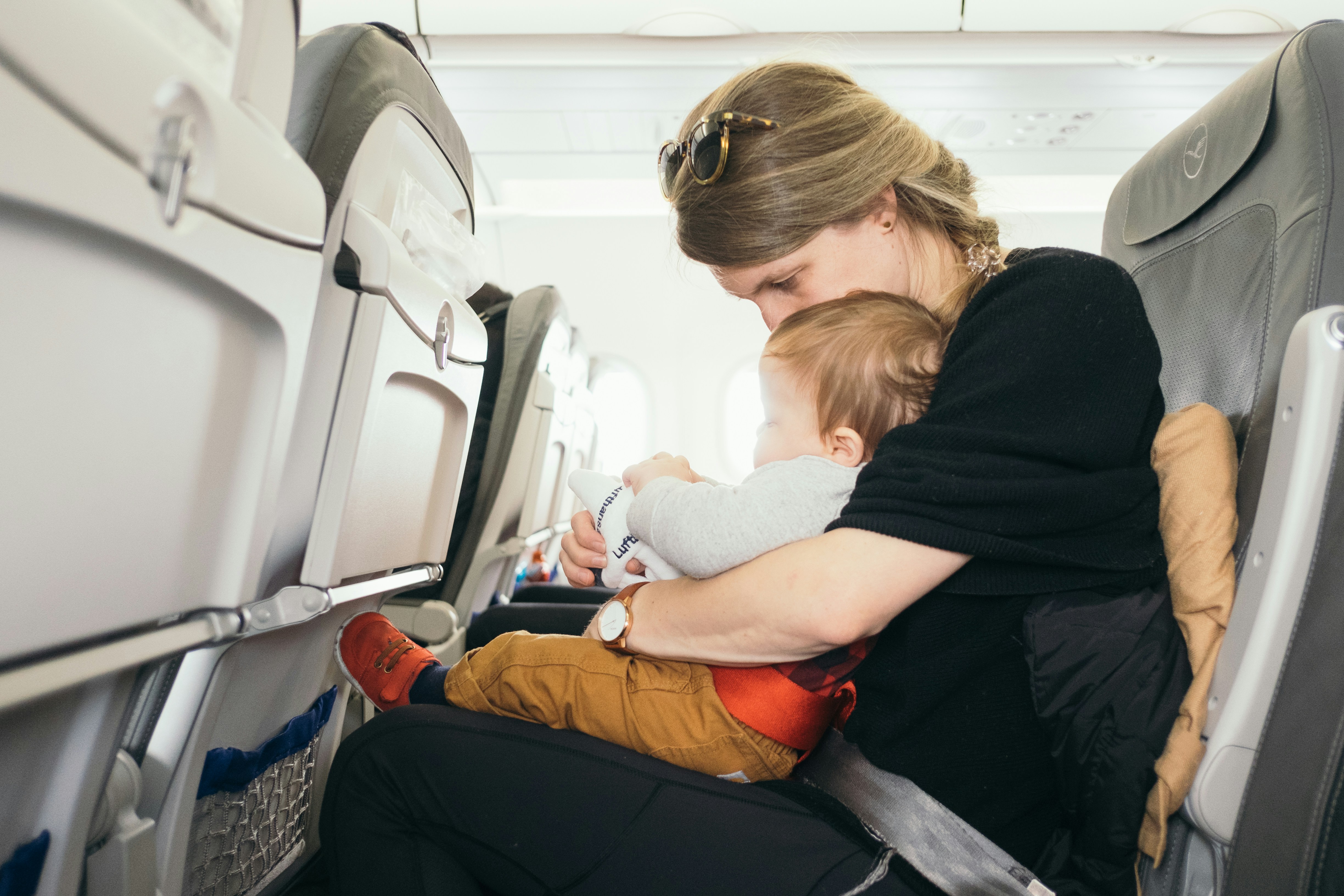
Anyone who’s flown knows you’re juggling a lot at the airport – your passport, ticket, phone, carry on. It’s a good idea to move through the airport with your baby in a baby carrier so you can keep your hands free. Your baby needs to be on your lap in a seatbelt for take off and landing but the carrier can also come in handy between those times for walking your baby around the plane.
Frequently Asked Questions
There is no ‘best age’ for roadtripping or flying with an infant but a lot of people agree between 4 and 9 months is manageable. Your baby isn’t walking yet but is more aware of the surroundings.
Travelling with babies and toddlers can get them used to the travelling for future adventures.
When flying with a baby, time feeding to coincide with take off and landing – the sucking motion helps equalise the ears. If you’re worried about the noise during the flight, add baby earmuffs to your infant travel checklist. Just make sure they don’t overheat while wearing them.